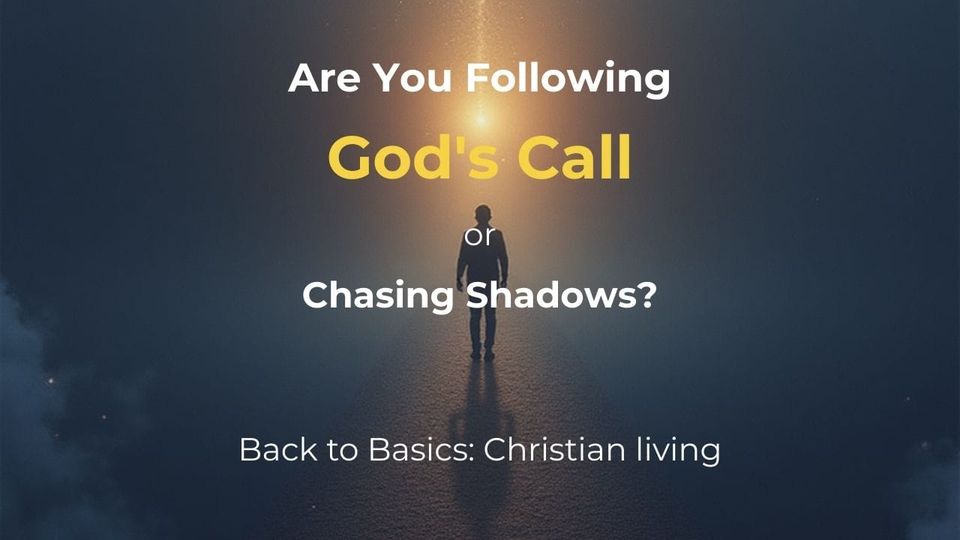
Are You Following God's Call or Chasing Shadows?
The Danger of Mistaking Our Desires for God's Direction
In the Christian walk, one of the most dangerous pitfalls we can encounter is confusing our own desires with God's direction. We can become so consumed with what we want—what seems good, what feels right, what appears to make sense—that we mistake the voice of our soul for the leading of the Holy Spirit. The result? We chase shadows of our own making rather than fulfilling the true calling God has placed upon our lives.
The apostle Paul warns us, "For to be carnally minded is death; but to be spiritually minded is life and peace" (Romans 8:6 KJV). When we operate from our soul—our emotions, intellect, and will—rather than from our spirit, we set ourselves on a path toward failure. Even worse, we position ourselves to blame God when things don't work out as we planned.
The Deception of Self-Validation
How often do we pray for "confirmation" when what we're really seeking is validation for decisions we've already made? We come before God with our plans neatly laid out, asking Him to bless what we've already determined to do. This isn't seeking God's will—it's asking God to rubber-stamp our own.
Scripture warns against this approach. Proverbs 14:12 tells us, "There is a way which seemeth right unto a man, but the end thereof are the ways of death" (Proverbs 14:12 KJV). Our human reasoning, no matter how sound it appears, cannot replace the wisdom and guidance of God. Yet we persist in cherry-picking verses that seem to support our agenda whilst conveniently ignoring the voice of the Spirit calling us to wait, to surrender, or to go in an entirely different direction.
Consider the Israelites at Kadesh Barnea. After refusing to enter the Promised Land when God commanded them, they later presumed to go up without God's blessing, saying, "Lo, we be here, and will go up unto the place which the LORD hath promised: for we have sinned" (Numbers 14:40 KJV). But Moses warned them: "Go not up, for the LORD is not amongst you" (Numbers 14:42 KJV). They went anyway—and were defeated. Their timing was their own, not God's, and the result was catastrophic.
Forcing Doors We Were Never Meant to Walk Through
We often speak of "open doors" as evidence of God's favour, citing: "Behold, I have set before thee an open door, and no man can shut it" (Revelation 3:8 KJV). But we must be discerning. Not every door that opens is from God, and not every door we force open through our own effort should be credited to His provision.
Human determination can accomplish much. We can network, strategize, and manipulate circumstances to achieve what we want. But just because we succeed in opening a door doesn't mean God ordained us to walk through it. In fact, sometimes the doors we force open lead us away from God's best and into spiritual wilderness.
James 4:3 reminds us, "Ye ask, and receive not, because ye ask amiss, that ye may consume it upon your lusts" (James 4:3 KJV). Our motives matter. When we're driven by ambition, fear, or personal desire rather than genuine surrender to God's will, even our prayers become tainted with self-interest.
Taking Responsibility for Soul-Driven Decisions
Perhaps the most sobering truth we must confront is this: when we charge ahead without truly seeking God's will, when we mistake our desires for His direction, when we fail because we were never operating in His plan—we must take responsibility. We cannot blame God for the consequences of our own soul-driven decisions.
This requires radical honesty. It means admitting that the business venture that failed, the relationship that crumbled, the ministry that collapsed—these may have resulted not from God's abandonment but from our own presumption. It means acknowledging that we heard what we wanted to hear rather than what God was actually saying.
David, a man after God's own heart, understood this principle. When he numbered Israel against God's command and brought judgement upon the nation, he didn't deflect blame. Instead, he confessed: "I have sinned greatly in that I have done: and now, I beseech thee, O LORD, take away the iniquity of thy servant; for I have done very foolishly" (2 Samuel 24:10 KJV). David took full responsibility for his soul-driven decision.
Distinguishing Between Soul & Spirit
How then do we discern between the promptings of our soul and the leading of God's Spirit? Hebrews 4:12 provides insight: "For the word of God is quick, and powerful, and sharper than any two edged sword, piercing even to the dividing asunder of soul and spirit, and of the joints and marrow, and is a discerner of the thoughts and intents of the heart" (Hebrews 4:12 KJV).
The Word of God, combined with the witness of the Holy Spirit, helps us distinguish between what we want and what God wills. This requires time in His presence, genuine prayer (not monologues where we do all the talking), and a willingness to hear "no" or "wait" as readily as we accept "yes."
Jesus modelled this perfectly in Gethsemane: "O my Father, if it be possible, let this cup pass from me: nevertheless not as I will, but as thou wilt" (Matthew 26:39 KJV). Even the Son of God submitted His soul's desire to the Father's will. How much more should we?
Moving Forward in True Surrender
If we've been operating from our soul rather than our spirit, the path forward begins with repentance and renewed surrender. We must lay down our agendas, release our timelines, and genuinely seek God's face. "Trust in the LORD with all thine heart; and lean not unto thine own understanding. In all thy ways acknowledge him, and he shall direct thy paths" (Proverbs 3:5-6 KJV).
This doesn't mean passivity—it means prayerful dependence. It means waiting when God says wait, moving when God says move, and trusting that His ways are higher than ours (Isaiah 55:9, KJV). It means being willing to abandon our carefully constructed plans if they don't align with His purpose.
The question before each of us is simple but profound: Are we following God's call or chasing shadows of our own making? The answer requires brutal honesty, deep spiritual discernment, and a willingness to let God be God in every area of our lives. Only then can we truly fulfil the calling He has placed upon us and experience the abundant life He promises…
Key Takeaways:
- It is possible to mistake strong desires for God’s direction, and that leads to spiritual harm and disappointment (Romans 8:6 KJV).
- Looking for “confirmation” can become self-validation when the decision is already made, and that can send someone down a path that only seems right (Proverbs 14:12 KJV).
- Presumption is dangerous. Moving without God’s blessing, even with good intentions, can still end in defeat (Numbers 14:40 KJV) (Numbers 14:42 KJV).
- Not every “open door” is God’s leading. Discernment is required before stepping through opportunities (Revelation 3:8 KJV).
- Motives matter in prayer. Asking “amiss” exposes the heart, and unanswered prayer can be a mercy and a warning (James 4:3 KJV).
- When things go wrong because of soul-led choices, the right response is ownership and repentance rather than blaming God (2 Samuel 24:10 KJV).
- God’s Word helps separate soul and spirit, so believers can discern what is of God versus what is self (Hebrews 4:12 KJV).
- Jesus models true surrender: real honesty before the Father, but complete submission to the Father’s will (Matthew 26:39 KJV).
- The way forward is renewed surrender and practical trust, refusing to lean on personal understanding (Proverbs 3:5-6 KJV).
- God’s ways are higher than ours, so waiting, surrendering, and course-correcting can be part of faithful obedience (Isaiah 55:9 KJV).