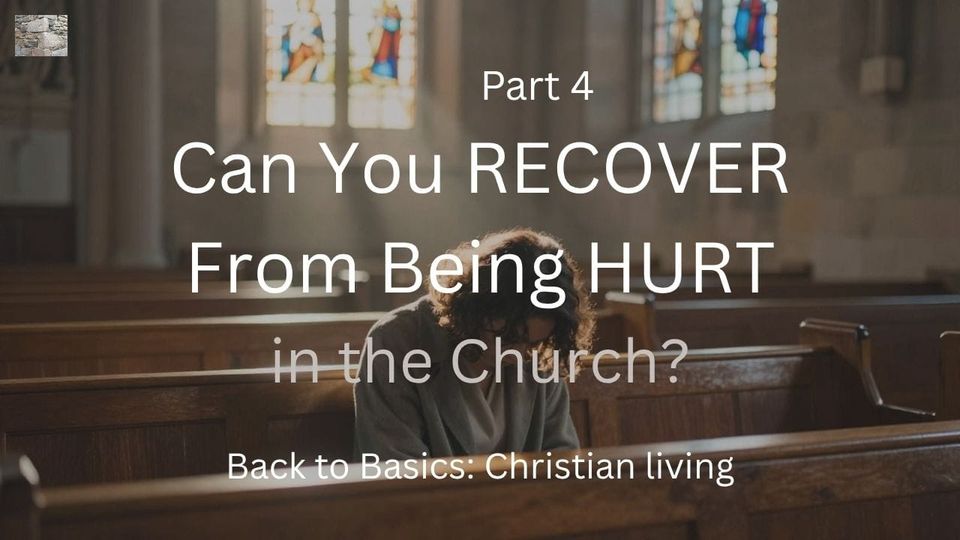
Part 4 – Can You Recover From Being Hurt in the Church?
The Word Among Us: Listening, Speaking, Mercy & Healing
A four-part series on life together in the body of Christ — from the ear, to the tongue, to the heart, to healing.
This little series walks through four plain truths about how we live together as the body of Christ, and they move in order: from the ear, to the tongue, to the heart, and at last to the place of healing.
We begin where every healthy relationship begins — with listening, to one another and to God. From there we turn to the tongue, and the quiet harm of gossip dressed up as concern. Then to the heart, and the mercy we are called to show because we have first received it. And we close with healing — how a wounded believer lays the hurt down and walks on, free.
Listen well. Speak well. Show mercy. Be healed. That is the walk worthy of our calling: That ye might walk worthy of the Lord unto all pleasing, being fruitful in every good work [Colossians 1:10 KJV].
Last time, in Part 3, we looked into the heart — at the mercy we are called to show, because God has first been rich in mercy toward us. Now we come to the final stop: healing — how a believer wounded within the body of Christ lays the hurt down and walks on, free…
Part 4 - Can You Recover From Being Hurt in the Church?
The wound is real — but it was never meant to become your home…
The wound is real
Let me ask you plainly: can a person recover from being hurt in the church? The honest answer is yes. But here is the harder question, and the one that matters more — will they?
Because recovery is not automatic. Two people can sit through the same storm, suffer the same words, share the same wounds — and walk out years later as two completely different people. One has healed. The other is still bleeding. Same circumstance. Same hurt. Two outcomes.
I have seen it with my own eyes. People I know and love stood beside us in the same difficult times. We came through it. We grieved, we prayed, we let it go, and we moved on to serve the Lord. Yet some of those same dear friends are still carrying it — still telling the story, still living in the wound, still rehearsing the pain as though it happened yesterday. And here is the part that grieves me most: for some, that hurt has quietly become a badge of honour. A trophy of survival. Proof of what they endured.
But a wound worn as a medal is still a wound. And the body of Christ was never meant to limp through life decorated with old injuries it refuses to let heal.
Why some recover and some do not
So what makes the difference? Why does one believer move on while another stays stuck?
It is rarely about the size of the hurt. It is almost always about what we do with it.
The one who recovers takes the pain to God and leaves it there. The one who stays stuck takes the pain to God — and then carries it straight back out the door. They pray about it, but they will not part with it. They ask the Lord to heal them, while gripping the very thing that keeps the wound open.
Scripture is clear about what that does inside a person: Looking diligently lest any man fail of the grace of God; lest any root of bitterness springing up trouble you, and thereby many be defiled [Hebrews 12:15 KJV]. Notice the word root. Bitterness does not stay on the surface. It goes down. It spreads. It troubles you first — then it defiles others. The unforgiveness you cradle today becomes the coldness your family feels tomorrow.
That is why letting go is not weakness. It is obedience. It is wisdom. It is survival.
Forgiveness is not pretending it never happened
Let me clear something up, because this is where many get tangled. Forgiveness does not mean the hurt was acceptable. It does not mean you say, "It didn't matter." It mattered. God saw it. He keeps perfect accounts: Vengeance is mine; I will repay, saith the Lord [Romans 12:19 KJV].
Forgiveness simply means you stop carrying what God has offered to carry for you. You hand Him the debt instead of demanding payment yourself. And be ye kind one to another, tenderhearted, forgiving one another, even as God for Christ's sake hath forgiven you [Ephesians 4:32 KJV].
Look at the standard — even as God for Christ's sake hath forgiven you. We were forgiven a debt we could never repay. How then do we hold a smaller debt against another and call it justice? Unforgiveness is the prisoner refusing to leave the cell after the door has been opened.
The danger of keeping the memory alive
Here is what I want you to see. There is a difference between remembering a hard time and living in it. Remembering can teach you, soften you, make you gentle with others who hurt. But living in it — bringing it back to remembrance again and again, telling it with the old heat still in your voice — that does not heal. It re-opens.
Paul knew this. After everything he suffered — beatings, prisons, betrayal inside the church itself — he wrote: Forgetting those things which are behind, and reaching forth unto those things which are before, I press toward the mark [Philippians 3:13–14 KJV]. He did not deny his past. He refused to be ruled by it. He reached forward.
And listen — Let all bitterness, and wrath, and anger, and clamour, and evil speaking, be put away from you, with all malice [Ephesians 4:31 KJV]. Put away. That is a deliberate act. You do not drift into freedom by accident; you choose it, often daily, sometimes verse by verse.
God is the One who heals the wound
Now hear the comfort in this. You are not asked to heal yourself by gritting your teeth. The healing is His work: He healeth the broken in heart, and bindeth up their wounds [Psalm 147:3 KJV]. Your part is to bring the wound to the Healer and stop tearing off the bandage.
So take it to Him — honestly, fully. Casting all your care upon him; for he careth for you [1 Peter 5:7 KJV]. He is not embarrassed by your pain. He cares. And He gives something we cannot manufacture ourselves: A new heart also will I give you... and I will take away the stony heart out of your flesh, and will give you an heart of flesh [Ezekiel 36:26 KJV]. That is the promise for the wounded believer. He does not just patch the old heart — He gives a new one.
So — can you recover?
Yes. You can. The grave clothes can come off. The badge can be laid down. The story can stop being your prison and start being your testimony of His grace.
But it begins with a choice that only you can make: to stop carrying what Christ already bore for you. Lay it down today. Forgive — not because they deserve it, but because you have been forgiven. Then walk on, worthy of the Lord unto all pleasing, being fruitful in every good work [Colossians 1:10 KJV].
The hurt was real. The recovery can be just as real. Don't wear the wound. Let Him heal it…
Key Takeaways:
Recovery is real, but it is a choice — not automatic. [Philippians 3:13–14 KJV]
Unhealed hurt becomes a root of bitterness that spreads to others. [Hebrews 12:15 KJV]
Forgiveness means handing God the debt, not pretending it never happened. [Ephesians 4:32 KJV]
God Himself is the Healer of the broken-hearted. [Psalm 147:3 KJV]
He gives a new heart to those who bring Him the old, wounded one. [Ezekiel 36:26 KJV]