Silencing the Noise!
The Power of God's Word in a Noisy World!
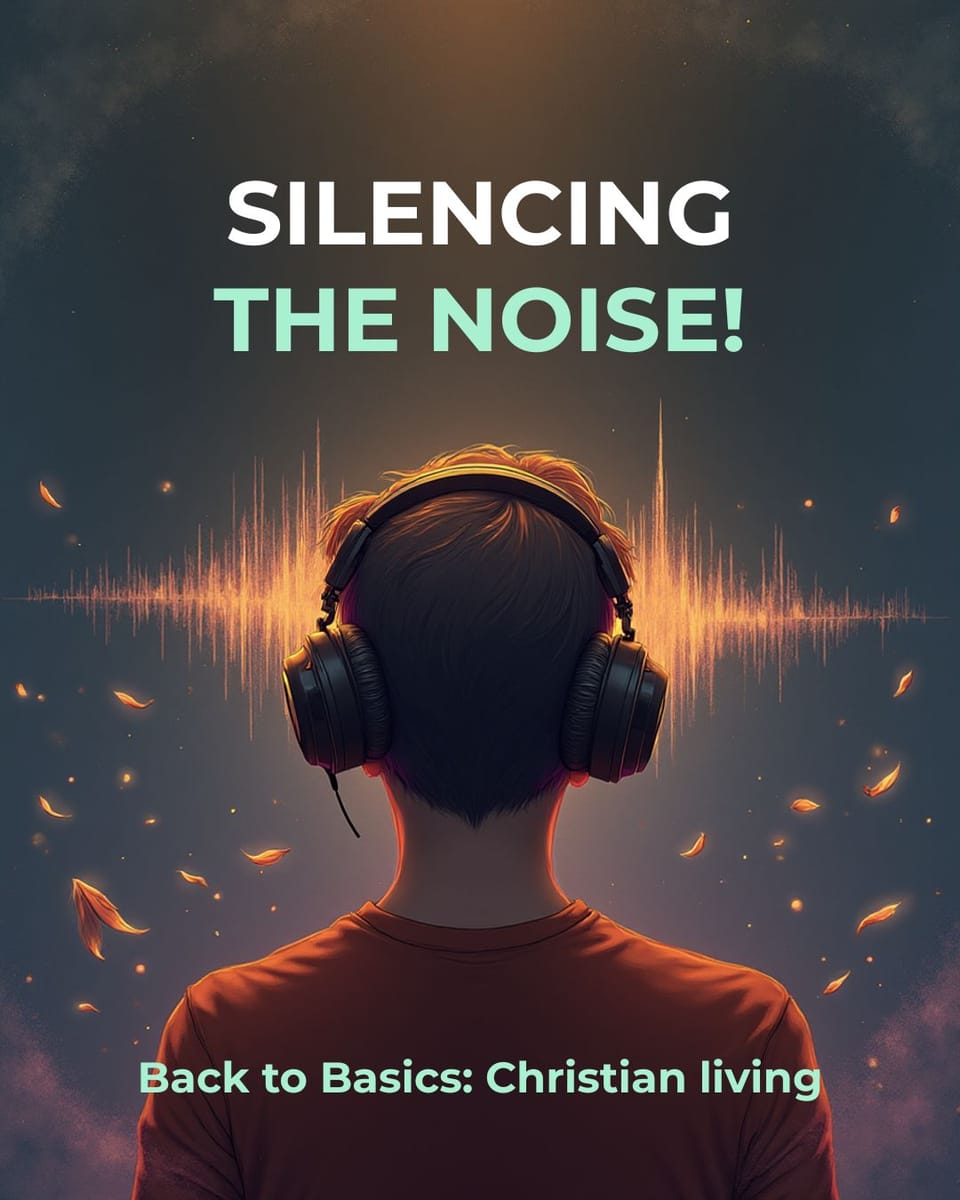
In today's Christian landscape, we find ourselves bombarded by a cacophony of voices, each claiming to offer deeper insights, newer revelations, and more sophisticated interpretations of God's Word. But amidst this intellectual noise, have we lost sight of the beautiful simplicity that Christ offers? Has our pursuit of theological debate overshadowed the practical application of faith? This reflection examines how we might return to the purity of God's Word in a world filled with distracting external voices.
The Modern Cacophony of Voices
We live in an age of unprecedented access to information. Podcasts, blogs, social media platforms, and countless books offer endless perspectives on Christian living and Biblical interpretation. While knowledge itself isn't harmful, the sheer volume of voices competing for our attention can lead us away from the straightforward truth of Scripture.
As Solomon wisely observed: "Of making many books there is no end; and much study is a weariness of the flesh." (Ecclesiastes 12:12 KJV)
This ancient wisdom rings particularly true today. The endless production of Christian content can leave us weary, confused, and distracted from the simple but profound truths of God's Word.
The Danger of Intellectual Distraction
The Apostle Paul expressed concern about this very issue when writing to the Corinthians: "But I fear, lest by any means, as the serpent beguiled Eve through his subtilty, so your minds should be corrupted from the simplicity that is in Christ." (2 Corinthians 11:3 KJV)
Paul understood that human reasoning and intellectual complexity could actually corrupt the pure, straightforward gospel message. He wasn't against knowledge—he was one of the most educated apostles—but he recognised that intellectual pursuits could become a distraction from Christ Himself.
How often do we find ourselves entangled in theological debates about non-essential matters while neglecting the weightier issues of faith, mercy, and obedience? Jesus Himself rebuked the religious leaders of His day for this very tendency: "Woe unto you, scribes and Pharisees, hypocrites! for ye pay tithe of mint and anise and cummin, and have omitted the weightier matters of the law, judgment, mercy, and faith: these ought ye to have done, and not to leave the other undone." (Matthew 23:23 KJV)
The Sufficiency of Scripture
At the heart of this issue is whether we truly believe in the sufficiency of Scripture. Do we trust that God's Word alone provides everything we need for life and godliness, or do we feel the need to supplement it with human wisdom?
The Bible clearly teaches its own sufficiency: "All scripture is given by inspiration of God, and is profitable for doctrine, for reproof, for correction, for instruction in righteousness: That the man of God may be perfect, throughly furnished unto all good works." (2 Timothy 3:16-17 KJV)
If Scripture truly furnishes us completely for every good work, why do we so often seek additional voices to guide us? Perhaps it's because we've been conditioned to value novelty over timeless truth, complexity over clarity, and human authority over divine wisdom.
Returning to the Simplicity of Christ
So how do we silence the noise and return to the simplicity that is in Christ?
First, we must prioritise Scripture itself over commentaries about Scripture. Jesus Himself challenged religious leaders by asking, "Have ye not read?" (Matthew 12:3 KJV). The implication is clear: direct engagement with God's Word should be our primary source of spiritual nourishment.
Second, we should evaluate all teaching by its faithfulness to Scripture. The Bereans were commended precisely for this practice: "These were more noble than those in Thessalonica, in that they received the word with all readiness of mind, and searched the scriptures daily, whether those things were so." (Acts 17:11 KJV)
Third, we must remember that knowledge without application is empty. James warns: "But be ye doers of the word, and not hearers only, deceiving your own selves." (James 1:22 KJV). The ultimate test of our spiritual understanding is not how much we know, but how faithfully we apply what we know.
The Practical Power of Simple Faith
There is profound power in the simple truths of Scripture. Consider how Jesus summarised the entire law: "Thou shalt love the Lord thy God with all thy heart, and with all thy soul, and with all thy mind. This is the first and great commandment. And the second is like unto it, Thou shalt love thy neighbour as thyself." (Matthew 22:37-39 KJV)
This is not complex theology, yet living out these commands requires a lifetime of devotion and practice. The Christian life isn't about accumulating more and more knowledge; it's about faithfully applying the fundamental truths we already know.
When asked what was required to inherit eternal life, Jesus didn't give a lecture on soteriology - He directed the inquirer to the Scriptures: "What is written in the law? how readest thou?" (Luke 10:26 KJV). Our Lord consistently pointed people back to the simplicity of God's revealed Word.
Finding Balance in Our Information Age
This is not to suggest that we should reject all Christian literature, teaching, or discussion beyond the Bible itself. God has gifted the Church with teachers and scholars throughout history who help illuminate Scripture's meaning. The Ethiopian eunuch benefited greatly when Philip explained Isaiah's prophecy (Acts 8:30-35 KJV).
However, we must maintain a proper hierarchy. Scripture alone is infallible; all human commentary, regardless of how insightful, remains subordinate to God's Word. As Paul warned, we should be careful "not to think of men above that which is written" (1 Corinthians 4:6 KJV).
The Joy of Simple Faith
There is profound joy in returning to the simplicity of Christ. When we strip away the layers of human speculation, theological trend-chasing, and endless debate, we discover afresh the pure gospel that has transformed lives for two thousand years.
As we navigate the information-saturated world of modern Christianity, let us heed the wisdom of Proverbs: "Trust in the LORD with all thine heart; and lean not unto thine own understanding." (Proverbs 3:5 KJV)
The Christian life is not primarily an intellectual exercise but a living relationship with Christ. While we should engage our minds in understanding Scripture, we must never forget that Jesus called us to have faith like little children (Matthew 18:3 KJV) - simple, trusting, and uncluttered by unnecessary complexity.
In silencing the external noise and returning to the purity of God's Word, we discover not a restriction but a liberation—freedom from the tyranny of human opinion and the joy of walking in simple obedience to our Lord.
"For my yoke is easy, and my burden is light." (Matthew 11:30 KJV)
Key Takeaways:
- Prioritise Scripture over human commentary - Direct engagement with God's Word should be our primary source of spiritual nourishment, not endless books and podcasts about it.
- Test all teaching against Scripture - Like the Bereans, we must evaluate every voice by searching the Scriptures daily to verify what we hear.
- Guard against intellectual distraction - Theological debates about non-essential matters can pull us away from the weightier issues of faith, mercy, and obedience.
- Trust in the sufficiency of Scripture - God's Word alone provides everything we need for life and godliness; we don't need constant supplements of human wisdom.
- Apply what you know - Knowledge without application is empty; we must be doers of the Word, not merely hearers.
- Embrace the simplicity of Christ - The Christian life centres on loving God and loving others - simple truths that require a lifetime of faithful practice.
- Maintain proper hierarchy - While Christian teaching and scholarship have value, Scripture alone is infallible and must remain supreme.
- Cultivate childlike faith - Jesus calls us to simple, trusting faith uncluttered by unnecessary complexity.