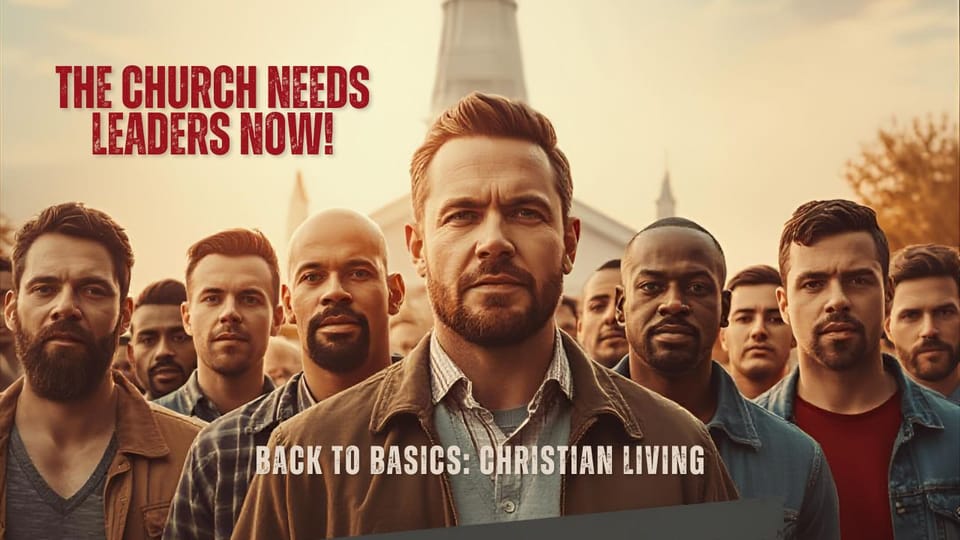
The Church Needs Leaders Now!
The Urgent Call for Leadership
The church of Jesus Christ stands as a beacon of hope in a world desperately searching for direction. Yet, for the church to fulfil its divine mandate, it requires strong, godly leadership. The need for faithful leaders in the church has never been more pressing than in our present age. Scripture is replete with examples and instructions concerning leadership, and it is to these timeless truths we must turn.
The Biblical Foundation for Leadership
From the very beginning, God has called and appointed leaders to shepherd His people. Moses led the Israelites out of Egyptian bondage, Joshua guided them into the Promised Land, and the judges ruled during times of spiritual decline. In the New Testament, Christ Himself established leadership within the church, choosing twelve apostles and later empowering them to lead the early church.
The apostle Paul wrote extensively about church leadership, recognising its critical importance. In his letter to Titus, he instructed: "For this cause left I thee in Crete, that thou shouldest set in order the things that are wanting, and ordain elders in every city, as I had appointed thee" [Titus 1:5 KJV]. This passage reveals that establishing leadership was not optional but essential for the proper functioning of the church.
The Qualifications of Church Leaders
Scripture provides clear qualifications for those who would lead God's people. These requirements are not suggestions but divine standards that ensure the church remains pure and effective in its mission. Paul outlined these qualifications to Timothy: "A bishop then must be blameless, the husband of one wife, vigilant, sober, of good behaviour, given to hospitality, apt to teach; Not given to wine, no striker, not greedy of filthy lucre; but patient, not a brawler, not covetous; One that ruleth well his own house, having his children in subjection with all gravity" [1 Timothy 3:2-4 KJV].
These qualifications emphasise character above charisma, faithfulness above fame, and spiritual maturity above worldly success. The church needs leaders who exemplify Christ-like character in every aspect of their lives. Their personal conduct, family life, and spiritual disciplines must be beyond reproach, serving as models for the congregation to follow.
The Responsibilities of Leadership
Church leaders bear weighty responsibilities before God. They are called to feed the flock with spiritual nourishment, protect the sheep from false doctrine, and guide believers towards spiritual maturity. Peter exhorted elders: "Feed the flock of God which is among you, taking the oversight thereof, not by constraint, but willingly; not for filthy lucre, but of a ready mind; Neither as being lords over God's heritage, but being ensamples to the flock" [1 Peter 5:2-3 KJV].
Leaders must faithfully proclaim God's Word without compromise. Paul charged Timothy: "Preach the word; be instant in season, out of season; reprove, rebuke, exhort with all longsuffering and doctrine" [2 Timothy 4:2 KJV]. In an age of increasing biblical illiteracy and doctrinal confusion, the church desperately needs leaders who will stand firm on Scripture and teach sound doctrine without wavering.
Moreover, leaders must be prayer warriors, following the example of the early church. When the apostles faced the demands of daily ministry, they declared: "But we will give ourselves continually to prayer, and to the ministry of the word" [Acts 6:4 KJV]. Prayer must be the foundation upon which all leadership activities rest.
Leadership as Servanthood
Perhaps the most misunderstood aspect of church leadership is its nature as servanthood. Jesus transformed the concept of leadership when He told His disciples: "But he that is greatest among you shall be your servant" [Matthew 23:11 KJV]. True spiritual leadership is not about authority and power but about humble service and sacrifice.
Christ Himself demonstrated this principle when He washed His disciples' feet, saying: "For I have given you an example, that ye should do as I have done to you" [John 13:15 KJV]. Church leaders must embrace this servant-hearted approach, leading not through domination but through loving service and personal example.
The Courage to Lead
Leadership in the church requires courage. Leaders must be willing to stand for truth even when it is unpopular, to confront sin even when it is uncomfortable, and to make difficult decisions even when they face opposition. Joshua received this divine commission: "Be strong and of a good courage; be not afraid, neither be thou dismayed: for the LORD thy God is with thee whithersoever thou goest" [Joshua 1:9 KJV].
The church needs leaders who will not compromise biblical principles to accommodate cultural trends or appease critics. They must possess the courage of Daniel, who purposed in his heart not to defile himself [Daniel 1:8 KJV], and the boldness of Peter and John, who declared: "We ought to obey God rather than men" [Acts 5:29 KJV].
Developing Future Leaders
Current leaders have a responsibility to identify, mentor, and develop the next generation of church leadership. Paul exemplified this principle in his relationship with Timothy, instructing him: "And the things that thou hast heard of me among many witnesses, the same commit thou to faithful men, who shall be able to teach others also" [2 Timothy 2:2 KJV].
This multiplication principle ensures the continuity of godly leadership across generations. Churches must intentionally invest in training programmes, mentorship relationships, and opportunities for emerging leaders to develop their gifts under the guidance of mature believers.
The Accountability of Leadership
With the privilege of leadership comes the sobering reality of accountability. James warned: "My brethren, be not many masters, knowing that we shall receive the greater condemnation" [James 3:1 KJV]. Leaders will give account to God for how they shepherded His flock and handled His truth.
This accountability should produce both humility and diligence in leaders. They must recognise that they serve under the Chief Shepherd, Jesus Christ, and will one day stand before Him to give account of their stewardship.
The church indeed needs leaders—not self-serving politicians or charismatic entertainers, but faithful shepherds who will love God's people, proclaim His Word, and lead by godly example. As Paul declared: "For though ye have ten thousand instructors in Christ, yet have ye not many fathers: for in Christ Jesus I have begotten you through the gospel" [1 Corinthians 4:15 KJV].
May God raise up a generation of leaders who will answer this calling with humility, courage, and unwavering devotion to Christ and His church. The harvest is plenteous, but the labourers are few—and amongst those labourers, the church desperately needs faithful leaders who will guide God's people according to His Word and for His glory…
Key Takeaways:
- Establish godly leadership in every church – Leadership is not optional but essential for the church to function properly; God has always called and appointed leaders to shepherd His people [Titus 1:5 KJV]
- Prioritise character over charisma – Church leaders must meet biblical qualifications emphasising blameless conduct, family faithfulness, self-control, hospitality, and teaching ability—character matters more than talent or popularity [1 Timothy 3:2-4 KJV]
- Feed, protect, and guide the flock – Leaders bear weighty responsibilities to nourish believers with God's Word, guard against false doctrine, and shepherd people toward spiritual maturity with willing hearts, not for personal gain [1 Peter 5:2-3 KJV]
- Lead through servant-hearted example – True spiritual leadership is not about authority and power but humble service and sacrifice; the greatest among you must be your servant, following Christ's example [Matthew 23:11 KJV, John 13:15 KJV]
- Stand courageously for biblical truth – Leaders must have the courage to uphold Scripture even when unpopular, confront sin when uncomfortable, and make difficult decisions despite opposition—obeying God rather than men [Joshua 1:9 KJV, Acts 5:29 KJV]
- Invest in the next generation – Current leaders must intentionally mentor and develop emerging leaders, committing truth to faithful people who can teach others, ensuring godly leadership continues across generations [2 Timothy 2:2 KJV]
- Embrace accountability before God – Leaders will give account to Christ for how they shepherded His flock; this sobering reality should produce humility and diligence in those who teach and lead God's people [James 3:1 KJV]