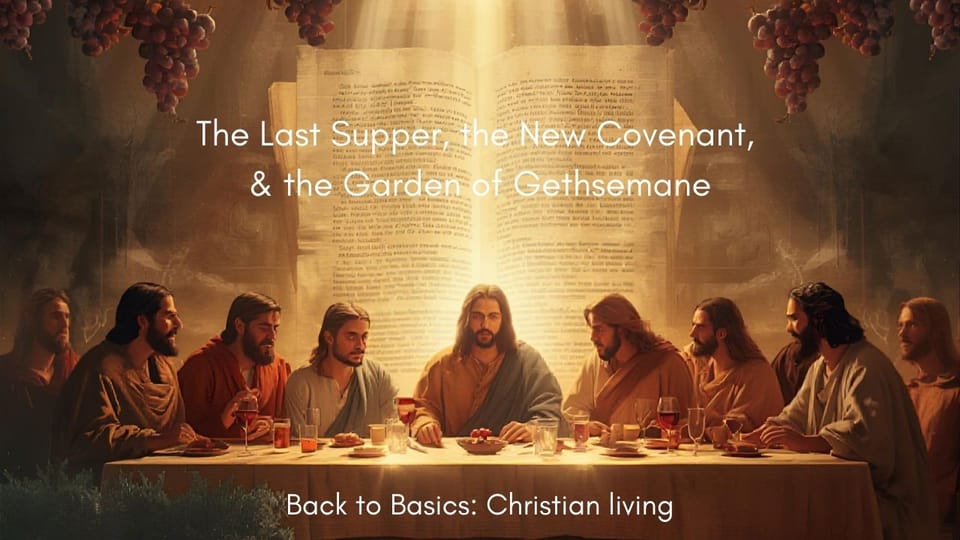
The Last Supper, the New Covenant, & the Garden of Gethsemane
The Significance of Christ's Sacrifice
The events of the Last Supper and Gethsemane represent some of the most profound moments in Scripture, revealing the depth of Christ's love and the gravity of His mission. As we examine these passages, we witness Jesus preparing His disciples for what was to come, instituting a new covenant, and demonstrating complete submission to the Father's will even in the face of unimaginable suffering.
The Passover Context
To understand the Last Supper, we must first appreciate its Passover context. The Passover commemorated Israel's deliverance from Egypt, when God commanded each household to sacrifice a lamb and apply its blood to their doorposts. "And they shall take of the blood, and strike it on the two side posts and on the upper door post of the houses, wherein they shall eat it" (Exodus 12:7 KJV). This blood protected them from the angel of death, allowing them to pass over safely.
Jesus deliberately chose this sacred meal to reveal Himself as the ultimate Passover Lamb. As John the Baptist had declared earlier, "Behold the Lamb of God, which taketh away the sin of the world" (John 1:29 KJV). The symbolism was unmistakable – just as the Passover lamb's blood brought deliverance from physical bondage, Christ's blood would bring deliverance from sin's bondage.
The Institution of the Lord's Supper
During this Passover meal, Jesus took bread and wine, transforming their meaning forever. "And as they were eating, Jesus took bread, and blessed it, and brake it, and gave it to the disciples, and said, Take, eat; this is my body. And he took the cup, and gave thanks, and gave it to them, saying, Drink ye all of it; For this is my blood of the new testament, which is shed for many for the remission of sins" (Matthew 26:26-28 KJV).
This wasn't merely symbolic ritual – Jesus was establishing a new covenant, prophesied by Jeremiah: "Behold, the days come, saith the Lord, that I will make a new covenant with the house of Israel, and with the house of Judah" (Jeremiah 31:31 KJV). Unlike the old covenant written on stone tablets, this covenant would be written on hearts through Christ's sacrifice.
The broken bread represented His body, soon to be broken for us. The wine represented His blood, soon to be poured out. Every time believers partake of communion, we remember this sacrifice and proclaim "the Lord's death till he come" (1 Corinthians 11:26 KJV).
The Betrayal Foretold
Amidst this sacred moment, Jesus revealed that one of the twelve would betray Him. "And as they did eat, he said, Verily I say unto you, that one of you shall betray me" (Mark 14:18 KJV). The disciples were troubled, each asking, "Is it I?" This question should resonate with us all – we must examine our own hearts for areas where we might betray Christ through our actions or inaction.
Jesus identified Judas as the betrayer, saying, "He that dippeth his hand with me in the dish, the same shall betray me" (Matthew 26:23 KJV). Yet even in this moment, Jesus showed restraint and gave Judas opportunity to repent. Tragically, Judas had already made his choice, fulfilling the prophetic words, "Yea, mine own familiar friend, in whom I trusted, which did eat of my bread, hath lifted up his heel against me" (Psalm 41:9 KJV).
Jesus's Teachings in the Upper Room
Following the meal, Jesus spent considerable time teaching His disciples, as recorded in John chapters 13-17. He washed their feet, demonstrating servant leadership. He promised the coming Holy Spirit: "But the Comforter, which is the Holy Ghost, whom the Father will send in my name, he shall teach you all things, and bring all things to your remembrance, whatsoever I have said unto you" (John 14:26 KJV).
He commanded them to love one another: "A new commandment I give unto you, That ye love one another; as I have loved you, that ye also love one another" (John 13:34 KJV). This love would be the distinguishing mark of His followers. He also prepared them for persecution and trouble in the world, whilst assuring them of ultimate victory: "These things I have spoken unto you, that in me ye might have peace. In the world ye shall have tribulation: but be of good cheer; I have overcome the world" (John 16:33 KJV).
The Garden of Gethsemane
After singing a hymn, Jesus led His disciples to the Garden of Gethsemane. The name itself means "oil press," symbolically appropriate for the crushing weight of what Jesus was about to endure. He took Peter, James, and John deeper into the garden, saying, "My soul is exceeding sorrowful, even unto death: tarry ye here, and watch with me" (Matthew 26:38 KJV).
The anguish Jesus experienced was real and profound. "And being in an agony he prayed more earnestly: and his sweat was as it were great drops of blood falling down to the ground" (Luke 22:44 KJV). Medical science recognises this condition as hematidrosis, which occurs under extreme stress. This physical manifestation revealed the magnitude of what He faced – not merely physical death, but bearing the full weight of humanity's sin.
The Prayer of Submission
Three times Jesus prayed, "O my Father, if it be possible, let this cup pass from me: nevertheless not as I will, but as thou wilt" (Matthew 26:39 KJV). This wasn't a prayer of rebellion but of honest human struggle surrendered to divine purpose. Jesus fully understood what the "cup" contained – God's wrath against sin, separation from the Father, and the horror of becoming sin for us.
Yet despite His natural human desire to avoid such suffering, Jesus chose obedience. His prayer demonstrates the proper response when our will conflicts with God's – complete submission. As He later told Peter, "The cup which my Father hath given me, shall I not drink it?" (John 18:11 KJV).
Meanwhile, the disciples repeatedly fell asleep, unable to watch even one hour with Him. Jesus gently rebuked them: "Watch and pray, that ye enter not into temptation: the spirit indeed is willing, but the flesh is weak" (Matthew 26:41 KJV). This remains applicable today – we must maintain spiritual vigilance through prayer, recognising our flesh's weakness.
Prophetic Fulfilment
These events fulfilled numerous Old Testament prophecies, particularly Psalm 22, which David wrote centuries earlier yet described crucifixion details with remarkable accuracy. The betrayal, the suffering, the crucifixion – all were foreordained parts of God's redemptive plan. As Peter later preached, "Him, being delivered by the determinate counsel and foreknowledge of God, ye have taken, and by wicked hands have crucified and slain" (Acts 2:23 KJV).
Application for Today
The Last Supper and Gethsemane teach us profound truths.
Firstly, Christ's sacrifice was deliberate and willing – He chose to drink the cup for our salvation.
Secondly, we're called to remember His sacrifice regularly through communion, examining ourselves and proclaiming His death until He returns.
Thirdly, we must follow Jesus's example of submission to God's will, even when it conflicts with our desires.
When we face our own "Gethsemane moments" – times of intense trial or difficult obedience – we can take comfort knowing Jesus understands. "For we have not an high priest which cannot be touched with the feeling of our infirmities; but was in all points tempted like as we are, yet without sin" (Hebrews 4:15 KJV).
The new covenant established that night remains in effect today. Through Christ's blood, we have forgiveness of sins, reconciliation with God, and eternal life. Let us never take this sacrifice lightly, but live worthy of such a great salvation, watching and praying as we await His return…
Key Takeaways:
- Christ as the True Passover Lamb: Jesus fulfilled the Passover symbolism, offering His life as "the Lamb of God, which taketh away the sin of the world" (John 1:29 KJV)
- The New Covenant Established: Through His blood, Jesus instituted a new covenant, as He said: "This is my blood of the new testament, which is shed for many for the remission of sins" (Matthew 26:28 KJV)
- Communion as Remembrance: Believers are called to regularly remember Christ's sacrifice through communion, "For as often as ye eat this bread, and drink this cup, ye do shew the Lord's death till he come" (1 Corinthians 11:26 KJV)
- The Reality of Christ's Suffering: In Gethsemane, Jesus experienced genuine anguish, His "sweat was as it were great drops of blood falling down to the ground" (Luke 22:44 KJV)
- Perfect Submission to God's Will: Despite His human desire to avoid suffering, Jesus prayed: "O my Father, if it be possible, let this cup pass from me: nevertheless not as I will, but as thou wilt" (Matthew 26:39 KJV)
- The Willing Nature of Christ's Sacrifice: Jesus chose to drink the cup of God's wrath, asking: "The cup which my Father hath given me, shall I not drink it?" (John 18:11 KJV)
- The Need for Spiritual Vigilance: Jesus warned His disciples and us: "Watch and pray, that ye enter not into temptation: the spirit indeed is willing, but the flesh is weak" (Matthew 26:41 KJV)
- Christ Understands Our Struggles: We have a High Priest who sympathises with us: "For we have not an high priest which cannot be touched with the feeling of our infirmities; but was in all points tempted like as we are, yet without sin" (Hebrews 4:15 KJV)
- Love as the Distinguishing Mark: Jesus commanded: "A new commandment I give unto you, That ye love one another; as I have loved you, that ye also love one another" (John 13:34 KJV)
- Victory Despite Tribulation: Jesus assured His followers: "In the world ye shall have tribulation: but be of good cheer; I have overcome the world" (John 16:33 KJV)