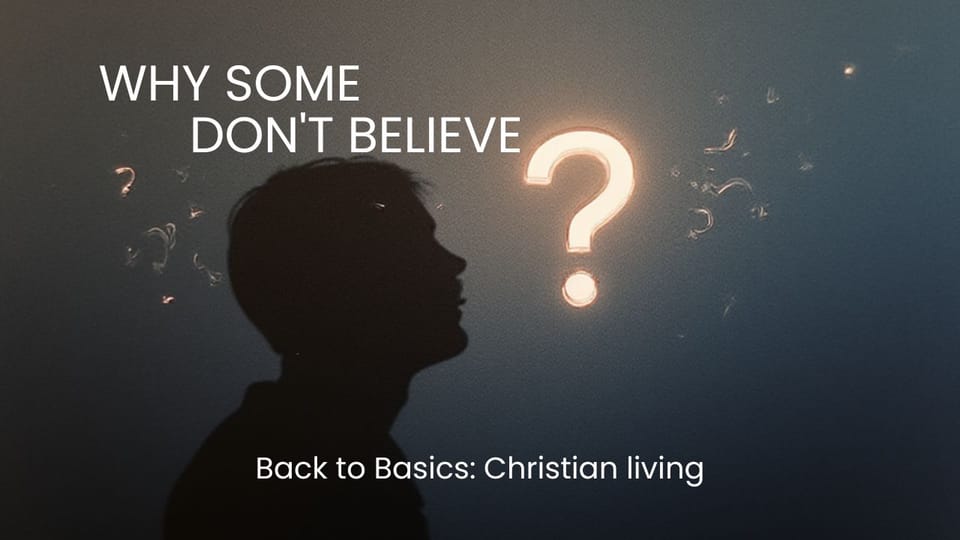
Why Some Don’t Believe?
1 Corinthians 2:14 (KJV): "But the natural man receiveth not the things of the Spirit of God: for they are foolishness unto him: neither can he know them, because they are spiritually discerned."
Have you ever shared the Gospel with someone, presented them with undeniable Scripture, and watched them shake their head in disbelief? Have you wondered why some people simply cannot grasp the truth of God's Word, no matter how clearly you explain it? The answer isn't found in your presentation or their intellectual capacity—it's found in their spiritual condition.
The Apostle Paul gives us profound insight into this reality. The natural man—the person living according to their fallen, unregenerate nature—cannot receive spiritual truth. It's not that they won't; it's that they cannot. The things of God are foolishness to them, not because the Gospel lacks power or clarity, but because they lack the spiritual capacity to comprehend it.
The Condition of the Natural Man
When Scripture speaks of the "natural man," it's describing humanity in its fallen state—separated from God, spiritually dead, and ruled by the flesh. This isn't a description of merely uneducated or unreligious people; it's the condition of every person before they're born again by the Spirit of God.
Paul explains this further when he writes to the Ephesians: "And you hath he quickened, who were dead in trespasses and sins; Wherein in time past ye walked according to the course of this world, according to the prince of the power of the air, the spirit that now worketh in the children of disobedience" (Ephesians 2:1-2 KJV). Notice the language—dead in trespasses and sins. A dead man cannot see, hear, or respond. Spiritual death produces spiritual blindness.
Jesus Himself addressed this reality when He said, "Verily, verily, I say unto thee, Except a man be born again, he cannot see the kingdom of God" (John 3:3 KJV). The word "cannot" is absolute. Without spiritual rebirth, the kingdom of God remains invisible, incomprehensible, and inaccessible.
Why the Gospel Seems Foolish
To the unregenerate mind, the Gospel message sounds absurd. The idea that God became man, died on a cross for sinners, and rose from the dead defies human logic and worldly wisdom. Paul anticipated this reaction: "For the preaching of the cross is to them that perish foolishness; but unto us which are saved it is the power of God" (1 Corinthians 1:18 KJV).
The world looks at the cross and sees weakness, defeat, and foolishness. They cannot comprehend how death could bring life, how sacrifice could produce victory, or how submission to God could mean true freedom. Their carnal reasoning tells them to trust in human wisdom, earthly power, and self-sufficiency. The Gospel confronts all of this and demands something the natural man refuses to give—complete surrender.
Consider how the Corinthians themselves struggled with this. Paul wrote, "For after that in the wisdom of God the world by wisdom knew not God, it pleased God by the foolishness of preaching to save them that believe" (1 Corinthians 1:21 KJV). God deliberately chose a method that the world would consider foolish to expose the bankruptcy of human wisdom and to ensure that salvation would be entirely by grace, not human achievement.
The Darkness of the Unregenerate Heart
Unbelief isn't primarily an intellectual problem—it's a heart problem. Jesus explained, "And this is the condemnation, that light is come into the world, and men loved darkness rather than light, because their deeds were evil. For every one that doeth evil hateth the light, neither cometh to the light, lest his deeds should be reproved" (John 3:19-20 KJV).
People don't reject the Gospel because they lack evidence; they reject it because accepting it would require them to acknowledge their sin and submit to God's authority. The natural man loves his autonomy, his sin, and his rebellion. Coming to the light means exposing all of that, and the unregenerate heart will fight to remain in darkness.
Paul described this wilful blindness to the Romans: "Because that, when they knew God, they glorified him not as God, neither were thankful; but became vain in their imaginations, and their foolish heart was darkened. Professing themselves to be wise, they became fools" (Romans 1:21-22 KJV). Notice the progression—they knew God but refused to glorify Him, leading to darkened hearts and foolish thinking. Unbelief is often a choice rooted in pride and rebellion.
The Work of Satan
We must also recognize that spiritual blindness isn't merely a passive condition—there's an active enemy working to keep people in darkness. Paul reveals this satanic strategy: "But if our gospel be hid, it is hid to them that are lost: In whom the god of this world hath blinded the minds of them which believe not, lest the light of the glorious gospel of Christ, who is the image of God, should shine unto them" (2 Corinthians 4:3-4 KJV).
Satan, the god of this world, actively blinds minds to prevent people from seeing Gospel truth. He doesn't need to convince them that Christianity is false—he simply needs to make it seem irrelevant, outdated, or foolish. He presents counterfeits and distractions, anything to keep the light of Christ from penetrating darkened hearts.
The Necessity of Spiritual Discernment
This is why spiritual things must be spiritually discerned. No amount of human reasoning, eloquent apologetics, or intellectual argumentation can open blind eyes. Only the Spirit of God can grant understanding. Paul makes this clear: "But God hath revealed them unto us by his Spirit: for the Spirit searcheth all things, yea, the deep things of God" (1 Corinthians 2:10 KJV).
When someone comes to faith, it's not because they were intellectually convinced—it's because the Holy Spirit opened their eyes and granted them spiritual life. Jesus said, "No man can come to me, except the Father which hath sent me draw him: and I will raise him up at the last day" (John 6:44 KJV). Salvation is entirely a work of God's grace from beginning to end.
What Does This Mean for Us?
First, it humbles us. We didn't believe because we were smarter, more spiritual, or more open-minded than others. We believed because God, by His sovereign grace, opened our eyes and granted us faith. Paul asked the Corinthians, "For who maketh thee to differ from another? and what hast thou that thou didst not receive?" (1 Corinthians 4:7 KJV). Everything we have, including our faith, is a gift from God.
Second, it should burden us for the lost. When we understand that unbelievers are spiritually dead and blind, it should move us to compassion and intercession. They're not our enemies—they're captives who need liberation. We must pray earnestly that God would open eyes and grant repentance.
Third, it should embolden our witness. We're not responsible for converting anyone—that's the Holy Spirit's work. Our responsibility is to faithfully proclaim the truth in love and trust God with the results. Paul wrote, "For though I preach the gospel, I have nothing to glory of: for necessity is laid upon me; yea, woe is unto me, if I preach not the gospel!" (1 Corinthians 9:16 KJV).
Finally, it should increase our dependence on prayer. If only God can open blind eyes, then our evangelism must be saturated with prayer. We must ask God to do what only He can do—grant life to the dead, sight to the blind, and faith to the lost.
The Hope of Transformation
The glorious truth is that God specializes in transforming natural men into spiritual men. Paul reminded the Corinthians of their own transformation: "And such were some of you: but ye are washed, but ye are sanctified, but ye are justified in the name of the Lord Jesus, and by the Spirit of our God" (1 Corinthians 6:11 KJV).
Every believer was once blind, dead, and foolish in their understanding of spiritual things. But God, in His great mercy, gave us life. He opened our eyes. He granted us faith. And He can do the same for anyone, no matter how hardened or resistant they may seem.
So don't give up on that family member, that friend, that co-workers who seems immune to the Gospel. Continue to pray, continue to witness, and continue to trust that the same God who opened your eyes can open theirs. "The Lord is not slack concerning his promise, as some men count slackness; but is longsuffering to us-ward, not willing that any should perish, but that all should come to repentance" (2 Peter 3:9 KJV).
The natural man cannot receive the things of God—but the supernatural work of the Holy Spirit changes everything. That's the hope of the Gospel, and that's why we must never stop proclaiming it…
Key Takeaways:
- Unbelief is spiritual inability, not intellectual deficiency: The natural man cannot receive spiritual truth because he lacks the spiritual capacity to comprehend it—it's foolishness to him (1 Corinthians 2:14 KJV)
- All humanity is spiritually dead before regeneration: Every person is dead in trespasses and sins, separated from God and ruled by the flesh until born again by the Spirit (Ephesians 2:1-2 KJV, John 3:3 KJV)
- Unbelief is primarily a heart problem, not an evidence problem: People reject the Gospel not because they lack proof but because accepting it requires acknowledging sin and submitting to God's authority (John 3:19-20 KJV)
- Satan actively blinds minds to Gospel truth: The god of this world works to prevent people from seeing the light of the Gospel by making it seem irrelevant, outdated, or foolish (2 Corinthians 4:3-4 KJV)
- Only the Holy Spirit can grant spiritual understanding: No human reasoning, apologetics, or argumentation can open blind eyes—salvation is entirely a work of God's grace (1 Corinthians 2:10 KJV, John 6:44 KJV)
- This truth humbles us: We didn't believe because we were smarter or more open-minded; God sovereignly opened our eyes and granted us faith—everything we have is a gift (1 Corinthians 4:7 KJV)
- This should burden us for the lost: Understanding that unbelievers are spiritually dead and blind should move us to compassion, intercession, and earnest prayer for God to open their eyes
- This should embolden our witness: We're not responsible for converting anyone; our responsibility is to faithfully proclaim truth in love and trust the Holy Spirit with results (1 Corinthians 9:16 KJV)
- Evangelism must be saturated with prayer: If only God can open blind eyes, we must depend entirely on Him to grant life to the dead, sight to the blind, and faith to the lost
- God specializes in transformation: The same God who opened your eyes can open anyone's eyes, no matter how hardened—don't give up on the lost; continue to pray and witness (1 Corinthians 6:11 KJV, 2 Peter 3:9 KJV)