When Asked the Hard Questions: Do You Fear Man or Trust God?
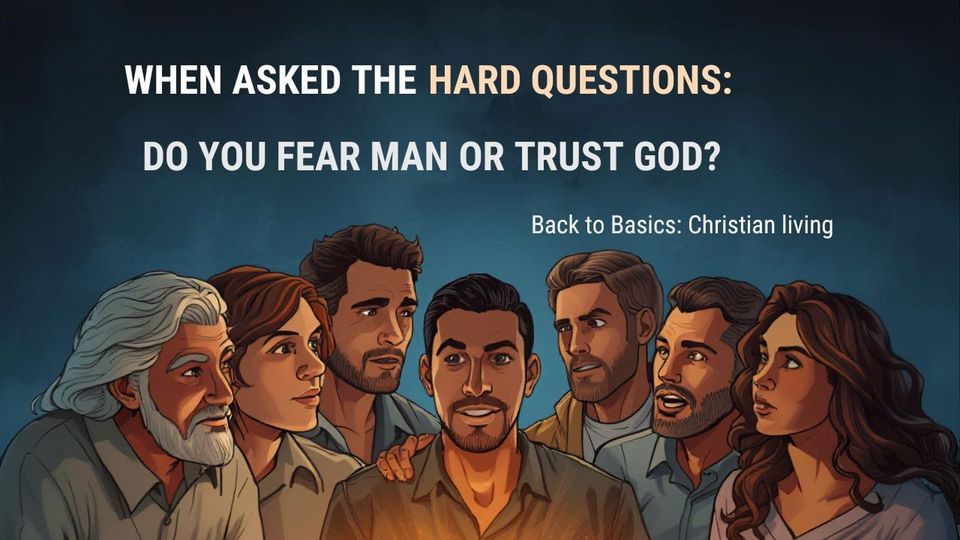
When Fear Tries to Silence Truth
I faced a challenging moment that every believer encounters sooner or later – being asked a difficult biblical question where I had to "stake my flag to the post" and declare what I truly believe. The question concerned those who lose their healing after being healed, a topic that requires careful discernment and honest faith.
In that moment, I was confronted with a choice: Do I fear the response of those asking? Do I soften my answer to avoid controversy? Or do I trust God to use my honest testimony – based on what I believe Scripture teaches and what I've witnessed in my Christian experience?
The Tension Between Pleasing People and Honouring God
It's natural to feel the weight of how our answer might be received. We don't want to offend, appear dogmatic, or create division. Yet Scripture reminds us:
"For do I now persuade men, or God? or do I seek to please men? for if I yet pleased men, I should not be the servant of Christ." – Galatians 1:10 (KJV)
When we're asked to explain what we believe about healing, faith, perseverance, or any biblical truth, we must remember that our primary audience is God, not man. Our responsibility is to speak truth in love, rooted in Scripture and confirmed by the Holy Spirit's witness in our lives.
Trusting God with the Answer
I've learnt that the most honest answer I can give isn't always the most comfortable one – but it's the one that honours God. When I share what I believe based on Scripture and my walk with Christ, I must trust that:
God will use my words for His purposes
The Holy Spirit will convict or comfort as needed
My honesty, even if imperfect, is better than a carefully crafted answer designed to please everyone
The Question of Lost Healing
The specific question about losing healing after being healed is profound. It touches on faith, perseverance, spiritual warfare, and God's sovereignty. Rather than giving a simplistic answer, I shared what I've observed and what Scripture reveals – that healing is both a gift of God's grace and sometimes requires ongoing faith and obedience to maintain.
Some lose their healing through unbelief, returning to sinful patterns, or failing to guard what God has done. Others face renewed attacks from the enemy. But in all cases, God remains faithful, and His power to heal hasn't diminished.
The Courage to Speak Truth
Speaking biblical truth requires courage. It means being willing to stand alone if necessary, to be misunderstood, or even criticised. But it also means trusting that God's Word doesn't return void and that when we speak from a place of genuine faith and experience, we're being faithful stewards of the Gospel.
"Sanctify the Lord God in your hearts: and be ready always to give an answer to every man that asketh you a reason of the hope that is in you with meekness and fear." – 1 Peter 3:15 (KJV)
A Challenge to Every Believer
So I ask you: When you're confronted with hard questions about your faith, do you fear man's response or trust God with your honest answer? Do you water down truth to avoid conflict, or do you speak with conviction, knowing that God will honour your faithfulness?
This week reminded me that our testimony matters. Our willingness to speak truth, even when it's uncomfortable, can impact someone's faith journey in ways we may never fully know. Let's commit to being bearers of truth and light – not just in our words, but in our courage to stand firm when asked to give account of what we believe.
May we all have the boldness to stake our flag to the post of truth, trusting God with the results…
Key Takeaways:
- Choose faithfulness over approval. Speak truth with humility, even when it costs you socially or emotionally.
- Remember your primary audience is God, not people. Measuring words by reactions leads to compromise [Galatians 1:10 KJV].
- Give answers that are rooted in Scripture and personal witness. Trust the Holy Spirit to convict, comfort, and guide [1 Peter 3:15 KJV].
- Hard questions require discernment, not shortcuts. It is better to be honest and careful than confident and shallow.
- Guard what God has done. Persevere in faith and obedience, and stay alert to spiritual opposition.
- Courage grows through practice. Each time you “stake your flag to the post,” you strengthen integrity and encourage others.